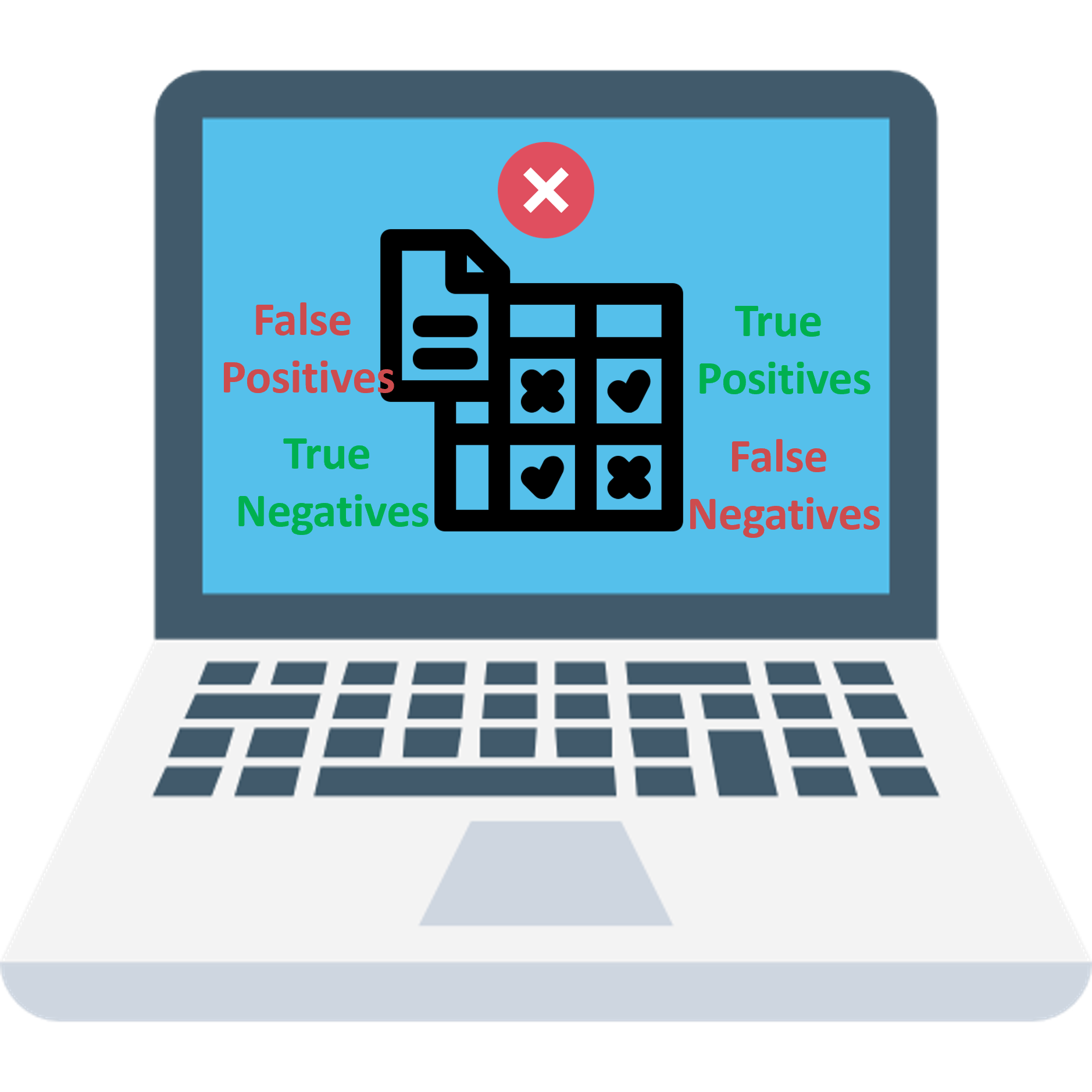
False positives and errors are both terms used to describe situations where a result or conclusion is incorrect. However, they are often used in different contexts:
False Positive:
- A false positive occurs when a test or procedure incorrectly indicates the presence of a condition or attribute that is not actually present.
- In other words, it's a result that wrongly indicates that something is present when it's not.
- For example, in medical testing, a false positive in a covid screening test would mean that the test suggests covid is present when the person is actually covid-free.
Errors:
- Errors are discrepancies between a computed, observed, or measured value and the true, theoretically correct, or accepted value.
- In a broader sense, errors can encompass various types of mistakes, inaccuracies, or deviations from what is expected or desired.
Both false positives and errors can have significant implications depending on the context in which they occur. In many cases, efforts are made to minimize these occurrences through improved testing methods, rigorous quality control measures, and careful consideration of potential sources of error.
 Health Course