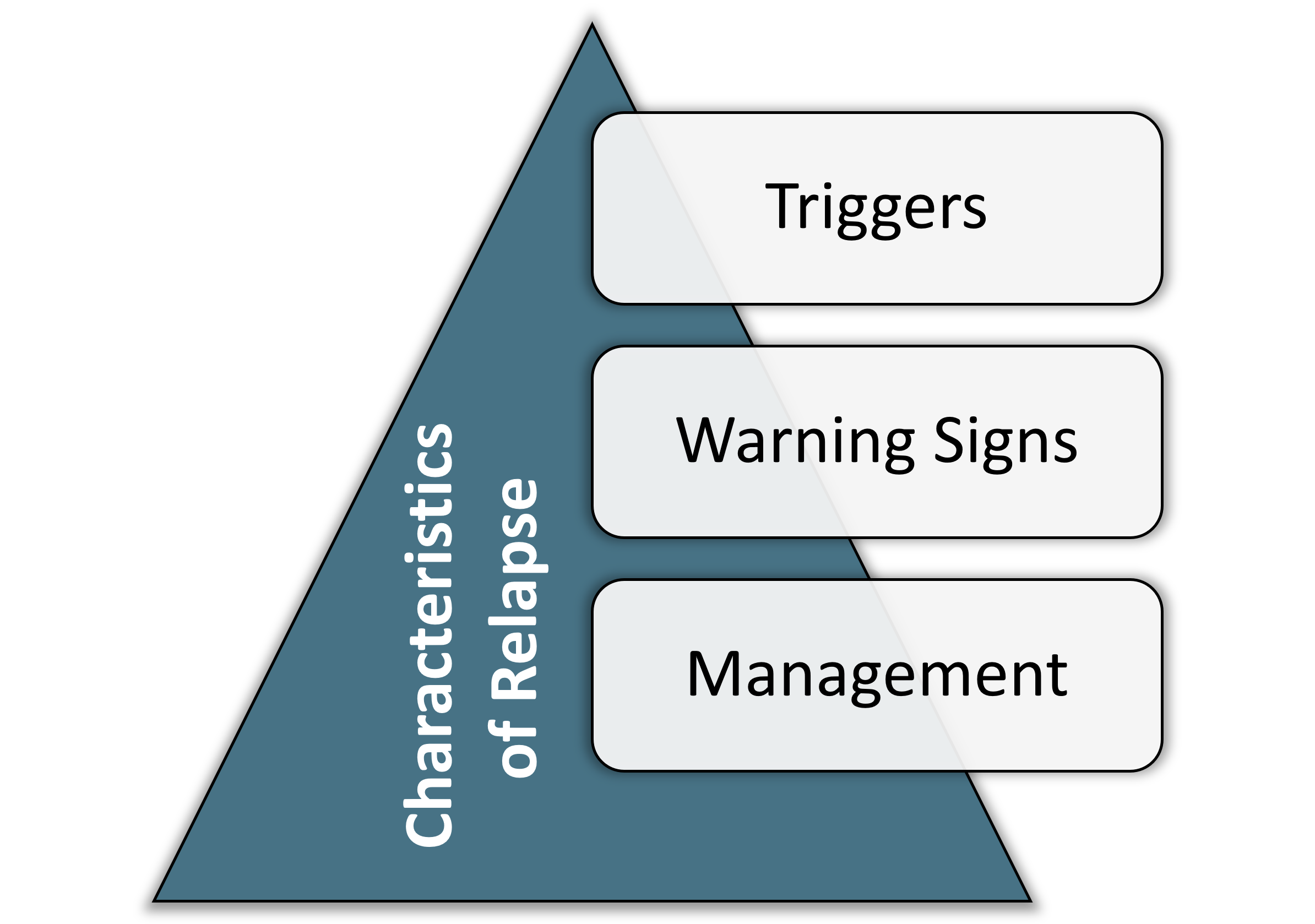
The characteristics of relapse refer to the specific signs, symptoms, and patterns that indicate a person is experiencing a recurrence of their mental health condition after a period of improvement or remission. These characteristics help in identifying when a relapse is happening or is likely to happen, allowing for timely intervention.
- Symptoms Reappearance: This means the return of the particular symptoms associated with the person's mental health condition. For example, in depression, it might mean feeling sad or hopeless again; in psychosis, it could mean experiencing social withdrawal or hallucinations.
- Triggering Factors: Certain events or situations can act as triggers for a relapse. These triggers can include stress, trauma, changes in medication, or environmental factors. Identifying these triggers is crucial for prevention and management.
- Gradual Onset: Relapse often does not happen suddenly. There can be early warning signs such as slight changes in mood, behavior, or thinking patterns that gradually escalate.
- Behavioral Changes: These are observable changes in a person's behavior, such as withdrawing from social activities, neglecting responsibilities, or changes in daily routines.
- Cognitive Changes: These refer to changes in thinking patterns, such as increased negative thoughts, difficulty concentrating, or changes in how a person perceives reality.
- Emotional Changes: Relapse can also be marked by changes in emotional state, like increased irritability, mood swings, or emotional numbness.
- Physical Symptoms: These are physical manifestations that can accompany mental health relapses, like changes in sleep patterns, appetite, or unexplained physical pains.
- Impaired Functioning: A relapse often leads to a decline in a person’s ability to function in daily life, affecting their work, school, and personal relationships.
 Health Course