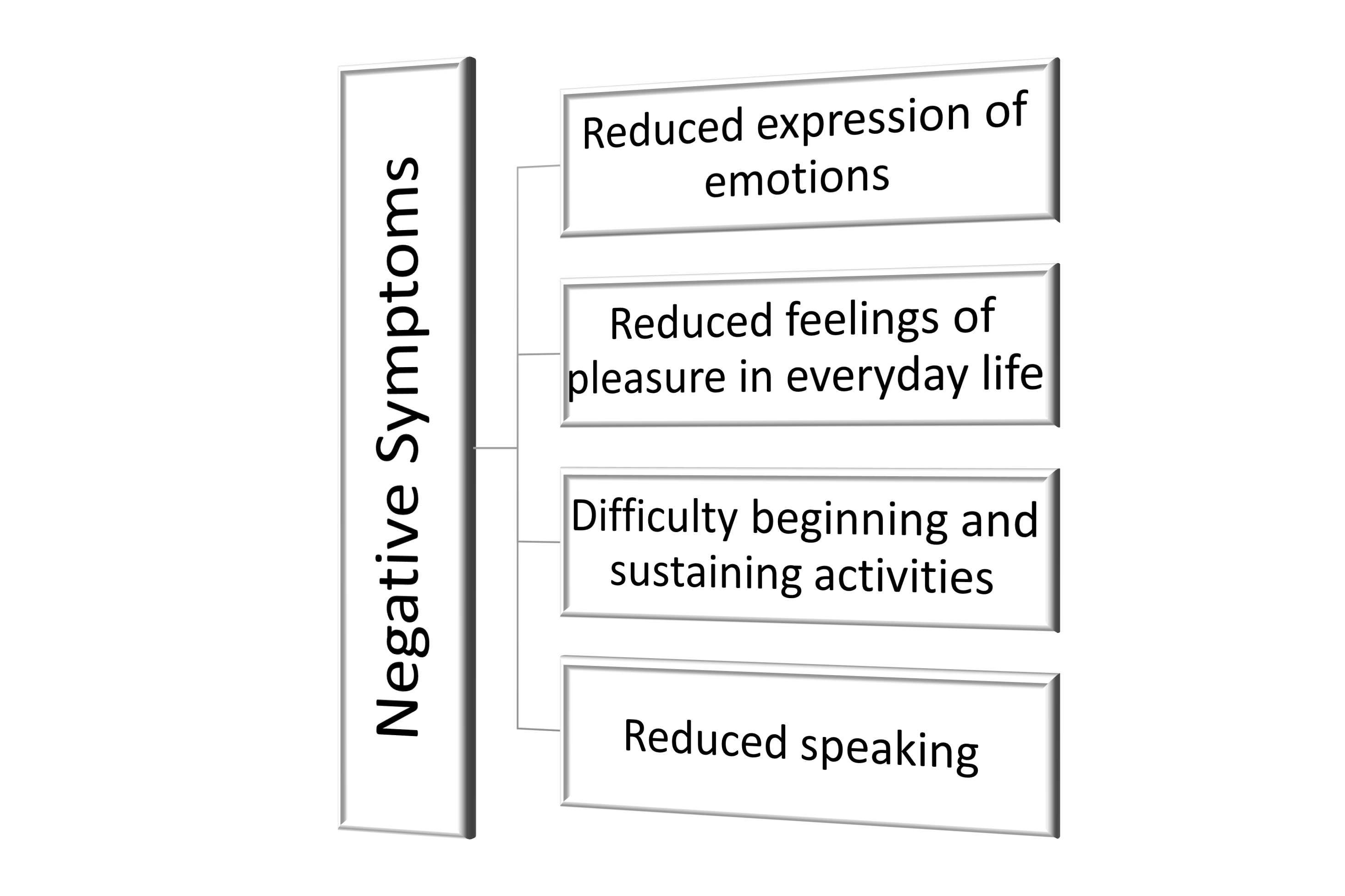
Negative symptoms of psychosis refer to the absence or reduction of normal behaviors and functions that are usually present in healthy individuals. These symptoms reflect a loss of abilities and can significantly impair a person's daily functioning and quality of life. Unlike positive symptoms, which add abnormal experiences or behaviors, negative symptoms take away normal capabilities and emotional responses.
Reduced expression of emotions: Also known as flat affect, this is where a person's face remains immobile, and they speak in a dull or monotonous voice.
Reduced feelings of pleasure in everyday life: This refers to anhedonia, where the individual experiences a decreased ability to feel pleasure from activities that were once enjoyable.
Difficulty beginning and sustaining activities: Known as avolition, this is characterized by a lack of motivation to start or maintain tasks, including everyday activities.
Reduced speaking: Also called alogia, this involves a significant reduction in the amount and content of speech, often resulting in brief and empty replies.
 Health Course