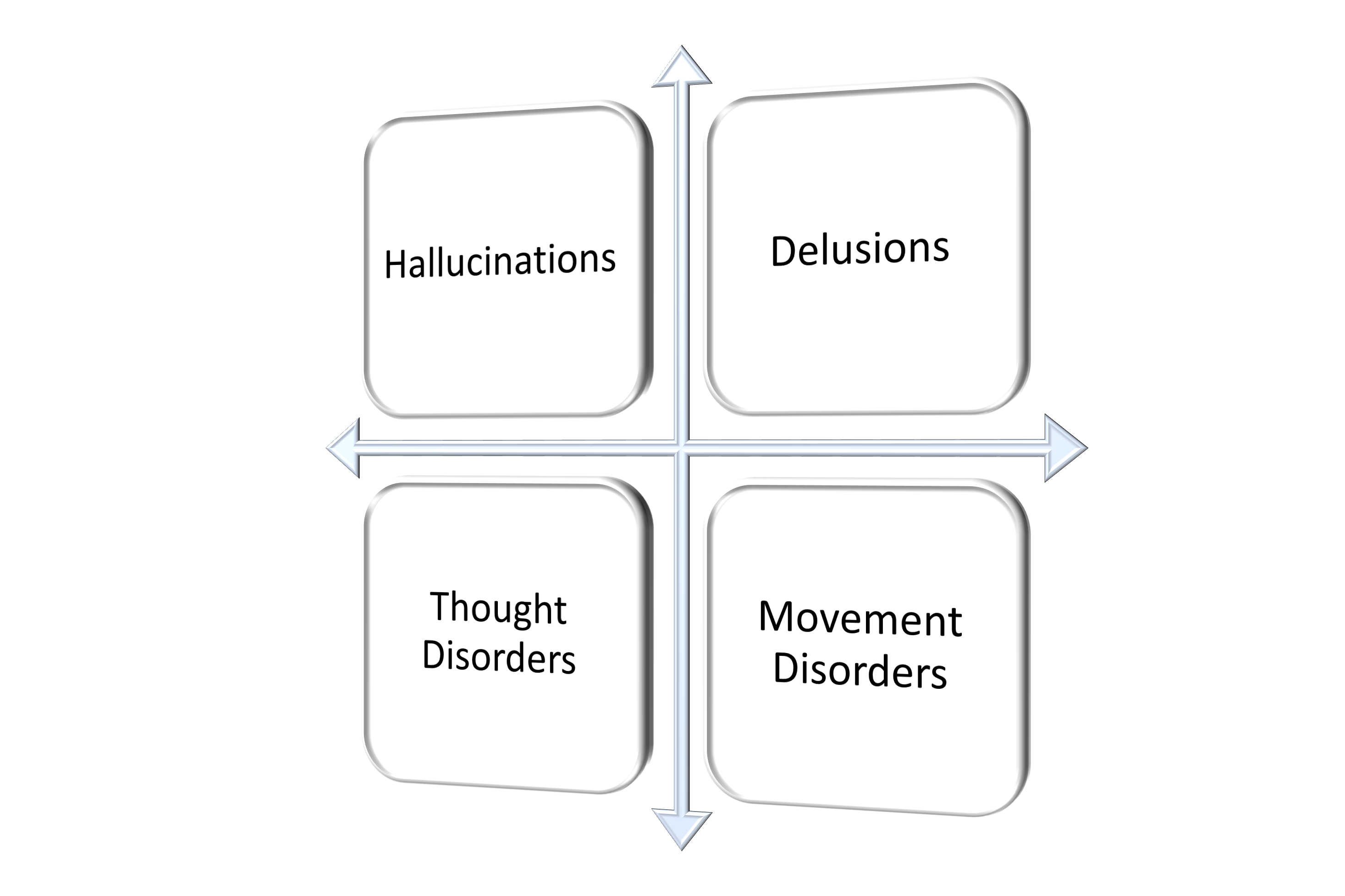
Positive Symptoms represent an excess or distortion of behaviors and experiences. They are called positive not because they are beneficial, but because they add something to the persons mental state that should not be there.
Hallucinations: These are false sensory perceptions that occur without any external stimuli. For example it might be that the individual hears voices or sees things that aren't actually present.
Delusions: These are strong, false beliefs that are not based in reality. For instance, a person might believe they have special powers, or they might think they are being persecuted or watched.
Thought Disorders: These involve unusual or dysfunctional ways of thinking. A person might have trouble organizing their thoughts or connecting them logically.
Movement Disorders: These can include a variety of abnormal motor behaviors. This might involve repetitive movements or, conversely, catatonia, which is a state of immobility and unresponsiveness.
 Health Course